
Navigating a Complex Industrial Real Estate Environment
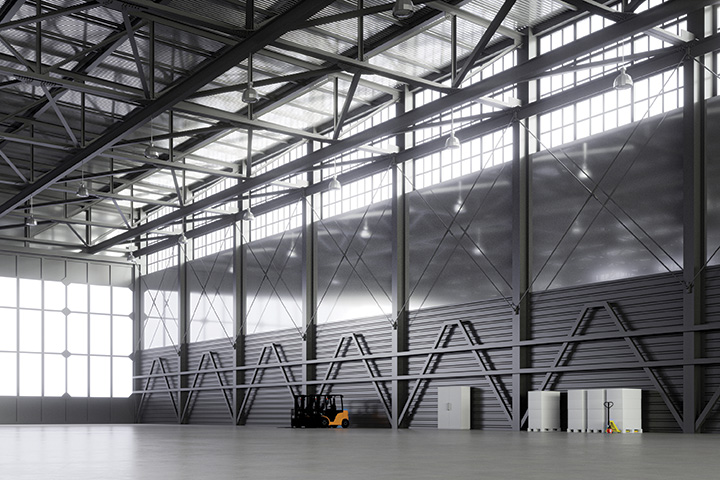
After years of record-low vacancies and rapid development, the industrial property market is recalibrating. Here's what distributors and manufacturers should know before expanding or investing in warehouse space.

Managing Broker and Founder
Core Industrial Realty
The pandemic was a defining moment for industrial real estate throughout the country. While offices were shuttered and social distancing became the norm, most industrial real estate assets were deemed essential and continued to operate. This created a spike in values for industrial real estate assets not seen in modern times. Along with investors looking to deploy capital into industrial real estate, cooped-up Americans increased their e-commerce spending by 31 percent in just 12 months — creating a sudden and unprecedented demand for industrial real estate spaces such as warehouses.
Conditions have somewhat settled down since COVID-19. The current warehouse vacancy in the United States today is approximately 7.3 percent compared to just below 3 percent during the peak years of 2022 and 2023. Vacancy rates throughout the United States vary significantly from market to market. A region such as greater Chicagoland is seeing vacancy around 4.6 percent while outlier markets and emerging markets are carrying higher vacancy rates closer to 10 percent. These differences can be attributed to an abundance of the speculative industrial spaces that were developed and delivered post-pandemic.
The warehouse building boom of the last few years appears to be over. Construction deliveries for new speculative industrial developments are estimated to have dropped by 35 percent in 2025 and a similar or slightly greater reduction is projected for 2026. This construction downturn is happening even as demand for new warehouses remains high. Two factors could be behind the slowdown. First, vacant or underutilized space is scarce in well-established industrial markets, making it difficult to find suitable locations to build in the first place. Second, the cost of capital has nearly doubled from the spring of 2022 to the spring of 2025, impacting developer appetite and capital partner participation in speculative industrial projects for secondary and tertiary markets. That’s not necessarily a long-term negative, however, as the reduction in warehouse development in 2025 and 2026 will act as a built-in control for the overall market, balancing supply with demand and creating a more stable and predictable warehouse environment moving forward.
While the pace of new facility construction attempts to recalibrate with current conditions, outside factors are putting pressure on the market. The start-and-stop nature of the United States’ current tariff policies prompted manufacturers and wholesalers to build up their inventories as they tried to get ahead of new import fees, creating a surge in demand for warehouse space in the early months of 2025. In the second quarter, companies pared back orders and paused decisions on leasing industrial space as tariffs were announced and enacted. The trend changed again during the third quarter, with renewed demand from manufacturing and auto sectors and an overall more stable environment.
With supply and demand evening out, more foodservice equipment and supplies distributors and manufacturers may be considering building ground-up facilities or leasing existing ones to expand their warehousing capacity. As they get started on that process, companies can use the following checklist to ensure they cover standard amenities and features as they determine their needs:
- Total square footage required
- Required square footage of office within the building
- Number of loading docks
- Number of grade-level doors
- Ceiling height and racking
- Power
- Automobile parking
- Trailer parking
This list is not exhaustive but can serve as a strong starting point as companies review their options. Depending on the unique aspects of the business, distributors and manufacturers may also need potential facilities to support technologies such as warehouse management systems or picking robots, be able to accommodate packaging requirements or be close enough to customers or transportation hubs for same- or next-day delivery. For companies that also do food processing, it’s critical to understand the available water supply before committing to a ground-up project, building acquisition or lease. If a municipality or township does not have a plentiful water source such as Lake Michigan, businesses should identify any impact fees, tap-in fees or other special assessments the local government will require based on water usage.
After addressing the checklist, there are two other critical aspects to warehouse operations that every foodservice equipment and supplies company should examine more closely: zoning restrictions and labor.
Easing Zoning Headaches
Before a distributor or manufacturer spends the time and resources to lease or purchase a facility, they need to understand all of the zoning restrictions in effect at the prospective site. While general zoning ordinances are relatively straightforward, most municipalities ultimately have the ability to deny occupancy by withholding a certificate of occupancy, a document that verifies the facility is structurally sound and safe to use. Even in cases where an industrial facility such as a warehouse meets all other zoning or code requirements, this document allows municipalities to utilize their own discretion to determine what type of company they ultimately approve for occupancy.
Equipment warehouses bring their own unique operations that can impact final occupancy approval. Noise, odors and a spike in truck traffic can trip up a distributor or manufacturer as they seek final occupancy. Companies can get ahead of these issues by holding an upfront meeting with the municipality and the key decision-makers to inform the city about their business, their use and any modifications they intend to make to a facility they are looking to lease or acquire. This will establish an initial relationship that can greatly benefit the occupancy process.
Subsequent tours of a company’s existing or satellite facilities are often a valuable endeavor to alleviate the concerns any municipality may have about a company’s operations. If a property is zoned ORI (office, research, industrial), M1 (limited manufacturing) or any other designation, there are detailed and specific uses and types of companies that a municipality will list as acceptable under this zoning. Even after identifying the appropriate zoning, with an acceptable use, it is still worthwhile to initiate dialogue with the municipality to ensure there are no unforeseen delays or impediments to getting up and running.
Accessing Local Labor
The uncertainty over tariffs may be one of the most obvious factors driving adjustments to supply chain strategies and warehousing demand, but other economic issues are also playing a role. Looking forward to 2026, well-located infill sites are likely to remain highly desirable for two reasons: cities and their surrounding suburbs offer more developed infrastructure and — more importantly — greater access to labor.
It’s true that the labor market has loosened a bit over the past year, rising from 4 percent at the start of the year to 4.3 percent in August, according to the U.S. Bureau of Labor Statistics. However, that uptick is largely coming from white-collar workers who are less likely to move to warehouse jobs. Meanwhile, revised immigration patterns and new immigration enforcement procedures are further tightening the blue-collar labor market. This ongoing worker scarcity is limiting warehousing companies from pursuing additional space in areas that do not fit within a tight geographic window of their existing operations.
The labor that keeps a warehouse running is not guaranteed when a company opens its doors for distribution or inventory management. Choosing the appropriate location is essential to ensuring that operational requirements will be met by a strong and appropriate labor force. The upfront economic benefits such as reduced land costs, lower building costs or incentives offered by certain municipalities and states do not negate the need for a robust local labor force.
Multistate or national distribution centers that boast of interconnectivity to key major highways often lack the amenities and surrounding residential developments to support a healthy and diverse workforce. If a company locates a distributor center directly off a major interstate, it may very well save in transportation costs, but it could lose the ability to attract employees from the immediate area.
Further considerations for employee retention include in-plant employee welfare areas, increased natural light throughout the facility and access to retail amenities that enable employees to conduct business on their way to and from work.
Based on the country’s current demographics and the changes and challenges associated with immigration, the labor that fuels the foodservice equipment and supplies industry and its warehouses will continue to have a critical impact on where a food company ultimately chooses to expand or relocate.
As the industrial real estate landscape evolves, foodservice equipment and supplies companies are striving to balance long-term supply chain opportunity with meeting near-term demand. By approaching site selection strategically — weighing location, cost and workforce alongside community engagement — distributors and manufacturers can position themselves for stability and success in an increasingly competitive market.
About the Author
Noel Liston is the managing broker at Core Industrial Realty, a FEDA business services member that provides industrial real estate brokerage services to the foodservice equipment and supplies industry. Learn more at coreindrealty.com. Liston can be reached at nliston@coreindrealty.com.