
Packaging EPR Puts Distributors on the Front Lines of a Regulatory Fight
As more states impose extended producer responsibility requirements, distributors face uncertainty over who is responsible, how fees are calculated, and whether the emerging patchwork can survive legal challenges.
By Tim O'Connor
Editor and Communications Manager
For distributors selling packaged equipment and supplies into Oregon, determining whether they are an obligated producer under the state’s new extended producer responsibility (EPR) program is only the first question. Once they figure out what packaging, if any, they are accountable for, and after consideration of various exemptions, they must then calculate how much covered material they are introducing into the state.
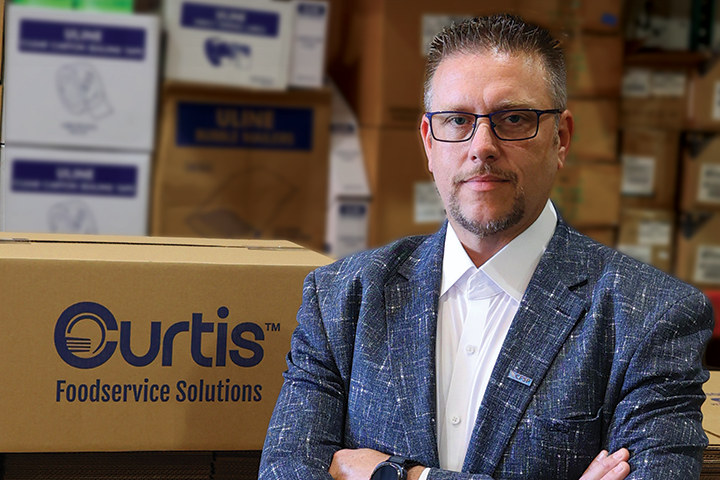
As distributors like Curtis Restaurant Equipment are discovering, making that calculation is easier said than done. The Springfield, Oregon-based distributor has been following the state’s first-in-the-nation implementation of an EPR program, which seeks to collect fees from companies that introduce packaged products into Oregon to pay for recycling and end-of-life programs. So far, CEO Ryan McPhail has identified two areas where Curtis might be responsible for paying EPR fees: disposables such as paper plates and to-go containers, and, more significantly, repackaged equipment.
Repackaging is a service Curtis provides to customers who order several supply products at once. Instead of sending everything individually, the distributor bundles multiple pieces of an order into one package, ensuring they are all delivered together to avoid disruptions in installation or operations. However, this means that Curtis is introducing new packaging into the distribution channel, which may be covered by Oregon’s EPR law. To report an accurate number to the state, Curtis would have to separately track the weight of every type of material — cardboard, paper void fill, plastic film, packaging tape — that goes into repackaging. Further, it would have to separate the materials used for Oregon customers from those shipments sent to foodservice operators in other states.
“We’d have to have one person on staff that’s just sitting there counting boxes and weighing out tape every day,” McPhail said. “That’s not realistic. Our team isn’t going to do that.”
Dedicating the labor hours it would take to provide an accurate count is prohibitively expensive, McPhail said. Still, the company wants to remain compliant, so he has a different plan if Curtis is determined to be a producer: report the total of all the repackaging materials the company buys during the course of the year — regardless of whether they are actually used or sent to customers in Oregon. Sure, Curtis will overstate its total EPR liability, but counting everything will at least avoid penalties, which can amount to a maximum of $25,000 per day.
It’s not an ideal solution, but it’s the kind of strategy EPR laws are forcing distributors to consider as they try to navigate vague and often poorly defined legislation. “We’re hopeful we won’t get hit with it, but we don’t really know how to move forward,” McPhail said of Oregon’s EPR law.
Curtis is not alone in that uncertainty. Oregon may have been the first state to implement and begin enforcing its packaging EPR law, but six other states — California, Colorado, Maine, Maryland, Minnesota, and Washington — have enacted similar legislation, and additional states have been considering adopting their own packaging EPR laws. With the laws becoming more widespread, nearly every distributor is asking questions about how their business will be affected and what, if any, fees they are required to pay.
The laws are reshaping the regulatory environment for businesses that supply packaging and packaged goods, including foodservice disposables and the boxes used to ship equipment. Through this new kind of policy framework, states are essentially shifting the financial responsibility for the end-of-life management of certain products from local governments to the businesses that introduce those products into their marketplace. The mechanism for this shift is the establishment of a producer responsibility organization (PRO), a private entity that administers the state’s EPR program and collects fees from companies that are determined to be obligated producers. Those fees are intended to be used to fund programs to create a circular economy by redirecting packaging from becoming waste to other uses or recycling.
FEDA published several resources over the summer designed to help member distributors navigate the emerging EPR regulatory environment. These documents are available at feda.com/epr-resources.
In most cases, FEDA’s research and a review by legal counsel at Holland & Knight LLP found that the obligated producer is the upstream, brand-owning manufacturer, not the distributor. However, there are specific scenarios where a distributor could be the obligated producer. Curtis’ repackaging program is one such example. Others include private-label products that use distributor-specified packaging, generic or unbranded packaged products as the first seller, situations where the distributor is the importer-of-record for foreign-branded equipment, and shipping packaging in direct-to-consumer remote sales.
Even in those situations, there can be exceptions. Under Oregon’s EPR law, the Plastic Pollution and Recycling Modernization Act (RMA), small producers with annual worldwide gross revenue of less than $5 million or producers supplying less than 1 metric ton of regulated products into Oregon on an annual basis do not have to pay fees to the program.
But the state’s published guidelines don’t address all the intricacies about how packaging arrives in Oregon, and who should be responsible. Take Curtis’ disposables business. Products such as takeout containers are covered under the Oregon law; however, Curtis purchases those items from another distributor in Oregon. So which one gets counted as the first company to introduce those containers into the state, making it the obligated producer? Similarly, who is the obligated producer for boxes when that packaging was bought from another Oregon company that already brought the boxes into the state?
The Oregon Department of Environmental Quality began enforcement against noncompliant producers in early 2026, but the lack of clarity around those kinds of questions has placed Curtis in stasis, McPhail said. If the company is a producer, it needs to register with the state’s PRO, the Circular Action Alliance (CAA) — more on them later. It then must report packaging data and pay fees to CAA. But the obligation only applies after a producer determination analysis verifies that a company is actually the obligated producer. “That’s where we’re stuck,” McPhail said. “Vague guidelines make it difficult to know who is responsible for what.”
As of August, Curtis has registered with the CAA in Oregon and California, but the company is still looking for more guidance from the states. The ambiguity around Oregon’s definition of “market entry,” the point at which an item is considered to have entered the state, has been particularly problematic for distributors. McPhail wants better clarity over whether that term applies to sales from distributor to distributor or only from distributor to end user. If it’s the latter, he worries that could make distributors responsible for many more kinds of packaging. “That would pretty much put the onus of everything on us, which would be terrible,” he said. “I think market entry definition would be a big one. That would at least clarify where our risk is.”
EPR Facing Mounting Legal Challenges
For distributors like Curtis, the uncertainty is not simply a compliance problem. It is also at the center of a broader legal battle over how EPR programs are structured, administered, and enforced. Led by the National Association of Wholesaler-Distributors (NAW), business advocacy groups have been working to invalidate the laws entirely through constitutional challenges. In July 2025, the same month Oregon’s reporting and fee requirements went into effect, NAW filed a lawsuit, NAW v. Feldon, challenging the RMA as a violation of both the U.S. and Oregon constitutions.
The key arguments of the filing include that Oregon improperly delegated its government fee-setting authority to a private organization, the CAA, without adequate standards or oversight, and with no way for businesses to challenge the CAA’s decisions in court. Further, NAW says the law compels businesses to join and financially support CAA as a condition of doing business in the state, prohibits businesses from disclosing EPR-related fees to customers, and allows CAA to use mandatory member dues to promote its political and policy positions that businesses may not agree with. The lawsuit also raises questions under the Dormant Commerce Clause, arguing that the RMA favors in-state entities over out-of-state entities and affects interstate commerce.
Michael Simon, the presiding judge for the U.S. District Court for the District of Oregon, agreed that the lawsuit had merit and that enforcement could lead to irreparable harm. As a result, the court imposed a preliminary injunction in February 2026 blocking Oregon from enforcing the RMA against NAW and its members. However, the constitutional challenges to EPR laws are novel and outcomes are uncertain. The lawsuit went to trial in mid-July and a decision could come later this year. FEDA members are encouraged to check feda.com for any updates on the lawsuit.
In a statement following the trial, NAW said its witnesses showed the court the extent of the real-world costs the RMA imposes on wholesaler-distributors — not only in terms of dollars but also in time and operational disruption. “The trial also exposed a fundamental accountability problem with EPR,” Brian Wild, chief government affairs officer for NAW, said. “Oregon has delegated enormous authority to the Circular Action Alliance, a private organization that sets fees using a confidential methodology producers cannot review or verify, and that Oregon itself acknowledged it neither recreated nor needed to use because it could administer the program on its own.”
The original NAW case established the core constitutional arguments against EPR, and now other organizations are using that as a basis for their own lawsuits. One such challenge came in June 2026 when a Texas-based food serviceware manufacturer, Lollicup USA, filed a class-action lawsuit against Oregon. The case contends that the RMA violates the U.S. Constitution’s Dormant Commerce Clause by placing burdens on interstate commerce that are clearly excessive relative to its local benefits. It discriminates against out-of-state producers, Lollicup USA v. Feldon claims, by effectively creating an impermissible tariff on goods entering Oregon. While the companies covered by the injunction for the original NAW lawsuit were limited to NAW members, Lollicup seeks to bar EPR enforcement against all producers.
Since the initial lawsuit against Oregon, NAW has filed two more challenges against other states’ packaging EPR laws. The first came in June 2026 when the association joined a 17-state coalition to challenge California’s version of the legislation. California’s Plastic Pollution Prevention and Packaging Producer Responsibility Act was signed into law in 2022 but did not go into effect until May 1, 2026. As in Oregon, the law requires businesses to register with and pay fees to CAA. A notable difference in this case, Nebraska v. Heller, is that the effort is being led by state attorneys general rather than NAW or another business group. Those states maintain that California is treating businesses in their jurisdictions unfairly by forcing them to pay EPR fees to enter the state’s market.
“California cannot reach across state lines and force businesses in Nebraska, or any other state, to adopt California’s preferred environmental policies,” Nebraska Attorney General Mike Hilgers said in a statement. “California does not get to set national policy. Nebraska is leading this coalition because the constitutional problem here belongs to every state.”
In mid-August, NAW and the 17-state coalition filed a request for a preliminary injunction in the California case, seeking similar injunctive relief as was granted in the Oregon lawsuit.
The latest challenge to packaging EPR is centered on Colorado. On July 30, 2025, NAW filed a lawsuit, NAW v. Ryan, on similar grounds to the other lawsuits: that Colorado is delegating its fee-setting authority to CAA without adequate standards or oversight, and that it is compelling businesses to join and financially support the privately owned organization.
“While each state law has its own idiosyncratic differences, our overarching challenge remains the same,” NAW President and CEO Eric Hoplin said. “No state should limit interstate commerce, nor should they delegate power to set and collect fees to a third party outside the scope of public scrutiny.”
Further bolstering the fight against Colorado EPR law is a lawsuit filed by the Independent Lubricant Manufacturers Association (ILMA) in Colorado state court. The lawsuit follows a similar blueprint to NAW’s case in Oregon and will serve as a test of whether those constitutional arguments can succeed in other jurisdictions.
Stemming the Proliferation of EPR
The hope among business advocacy groups is that a successful lawsuit in Oregon or one of the other states with active EPR enforcement will deter other policymakers from adopting equivalent laws in their jurisdictions. The legislatures in at least 14 other states have considered EPR laws, though several of those attempts have been set aside or failed to advance in a floor vote.
A similar piece of legislation that business advocacy groups are watching is New Jersey’s Recycled Content Law. While New Jersey’s law does not use a producer responsibility organization like in other states, it still imposes requirements that are adjacent to those of EPR regulations. Among other things, it sets minimum levels of recycled content that must be used in rigid plastic containers, plastic beverage containers, glass containers, paper and plastic carryout bags, and plastic trash bags, and prohibits use of polystyrene loose-fill packaging. Food packaging using these materials must comply with those requirements starting January 2027.
Legislation like the New Jersey recycling law shows that the packaging EPR issue is likely to remain a concern even if courts curb implementations that use a third-party producer responsibility organization. As states adopt different standards and fees for managing packaging, McPhail anticipates distributors will face even more complex compliance burdens. “We’re looking at this from the aspect of going into Oregon, but we sell into most states as well,” he said. “So now we have to figure out the criteria for each one of those states.”
The issue compounds itself for distributors with facilities and customers in different parts of the country. Consider the scenario where a dealer moves equipment into its warehouse in Oregon, repackages it, then sells it to a chain customer in California. Depending on how the definition of an obligated producer is interpreted, distributors could end up paying fees to both states for the same packaging. Distributors could shift strategies to have manufacturers drop-ship equipment and supplies directly to the end user on the distributor’s behalf. Drop shipping would avoid the possibility of duplicative EPR fees, but doing so could undermine the service value that companies like Curtis pride themselves on adding to the distribution channel.
“If it’s a large enough project, you’ve got to coordinate 10 different vendors to drop-ship everything at the same time,” he said. “That’s why we have our warehousing, so that we can get it consolidated, make sure we have everything, and then deliver it to site in one shot.”
Beyond the regulatory burden and added costs, EPR fees could affect how the foodservice equipment and supplies industry addresses challenges like freight damage. One of the purposes of the state programs is to motivate obligated producers to use fewer materials in their packaging. While that aims to lessen the recycling load, it may also have an adverse effect on the work of the FEDA Future of Distribution Council to improve the quality of packaging to better protect equipment in transit. If reducing packaging materials compromises the ability of the packaging to absorb the jostling and bumps that happen during shipping, then distributors can expect more freight claims and an uptick in the number of customers rejecting equipment deliveries.
Alternative Approaches
If the goal of EPR laws and similar policies is to encourage packaging producers to use less or more recyclable material, McPhail suggests an alternative to the punitive approach. Instead of simply imposing new fees through a complicated and poorly defined regulatory structure, policymakers could provide incentives for businesses to make environmentally beneficial investments such as replacing diesel delivery trucks with greener alternatives. “Then it’d be a conversation,” he said. “As we purchase new vehicles, do we then look at something that’s more of a biodiesel? Or is there something else that would offset the carbon footprint to reduce those EPR fees?”
Ultimately, the debate over EPR is about more than who pays the fee. For distributors, the emerging patchwork of state laws raises fundamental questions about who is responsible for packaging, how those obligations are determined, and whether environmental goals can be achieved without creating unnecessary costs and inefficiencies in the supply chain. As more states consider their own approaches, distributors will be watching not only the courts, but also whether policymakers can find a way to make packaging responsibility clearer, more consistent, and more workable.