
Standing Out Through Post-Sale Service
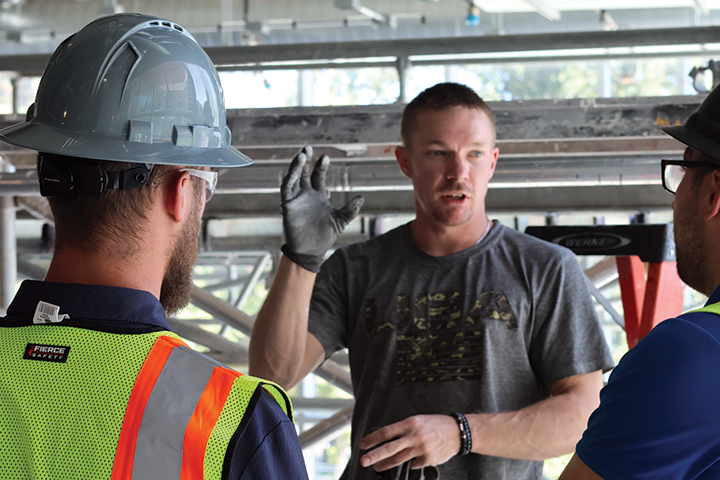
Distributors earn repeat and referral business by keeping kitchens running, solving problems, and staying involved long after equipment installation.
By Bridget McCrea
Contributing Writer
Commercial kitchens operate like orchestras where every piece of equipment must perform in sync. A hospital cafeteria may serve thousands of meals a day, while a 24/7 diner can’t afford to miss a rush. When equipment fails, the disruption is immediate — and costly.
In 2026, more distributors are building their businesses around that reality, knowing that the real customer relationship starts after delivery, when they become the partner who keeps that equipment running right. A $15,000 combi oven becomes a 15-year partnership and a recurring revenue stream when distributors stick around to train staff, maintain equipment, and solve problems before those issues drain a customer’s profits.
This article explores how service shifts from a one-time transaction to ongoing support for three different foodservice equipment and supplies distributors who recognize that equipment downtime costs operators far more than the price of repairs. By positioning themselves as essential partners, these distributors create lasting relationships built on trust, responsiveness, and a deep knowledge of their customers’ operations.

Adam Israel
Turning Warranty Headaches Into Competitive Advantage
When equipment goes down at a school cafeteria or a hospital kitchen, customers don’t call the manufacturer. They call Great Lakes Ventures to manage the entire warranty and service process on their behalf. “For the most part, dealers all do relatively the same thing,” Israel said. “We all sell, install, and help design equipment and solutions. The only differentiator is service.”
For nearly 20 years, the service team has been tracking all warranty information and coordinating with service companies and manufacturers. The model insulates customers from disputes over coverage, delays in response, and confusion over who pays the bill. It also gives Great Lakes Ventures leverage with manufacturers, since the distributor can spot problematic equipment lines across multiple installations and push for fixes.
The FEDA member buys equipment in volume and tracks performance across dozens of installations. That way, restaurant owners and kitchen managers don’t have to argue over invoices or sit on hold with manufacturer hotlines — a costly distraction when a single piece of equipment can shut a kitchen down for the day. Great Lakes Ventures also keeps all product serial numbers and warranty details on file, which means customers don’t have to hunt down paperwork to get their warranty or repair claims going.
Great Lakes Ventures also trains all users — from kitchen managers to line cooks and everyone in between — on proper equipment usage and maintenance, all with the goal of preventing service calls altogether. “I want to sell a piece of equipment and then not have to hear about it,” Israel said. “That’d be the best problem in the world.”
Of course, equipment failures are bound to happen. Great Lakes Ventures’ service team handles the tough conversations, whether that means explaining to a client that user error voided the warranty or pushing a manufacturer to provide coverage.
“We do our best to make sure the end-user is not the one being punished with delay in service or paying a bill they do not deserve to pay,” said Israel, who’d rather have those difficult discussions early and find the fastest solution. “We’ve just never been the dealer that finds out about a problem and says, ‘good luck,’ and our customers know that.”
The post-sale support model requires patience and dedication to put into action and is not immediately profitable, Israel acknowledged. But for Great Lakes Ventures, that investment has been worthwhile because the value compounds over time. “Your reputation is really what matters,” he explained. “As long as you’re providing something better than your competitors, you’re probably in a good spot.”

Michael Lichter
One-Stop-Shop Model That Drives Smarter Sales
Culinary Depot’s service philosophy starts long before the sale even takes place. Based in Spring Valley, New York, the distributor approaches every project as the beginning of a long relationship, not a transaction. It helps customers choose equipment that is the right fit for their operations, fully expecting to support that kitchen for years to come.
“Our focus is the lifetime of the customer, not the sale,” CEO Michael Lichter said. “If you’re going to be working with someone for three, five, or 10 years, you want to make sure you’re giving them the right products so they don’t come back in four years saying, ‘That was a bad choice.’”
That long-term accountability touches every aspect of Culinary Depot’s operation. When an oven breaks down at a customer’s kitchen, the distributor’s dedicated support team handles all coordination with manufacturers and service agents; troubleshoots issues directly with customers; and expedites parts when manufacturers quote long lead times.
“We make sure our customers don’t have to work with a service company or a manufacturer,” explained Pearl Meisels, director of operations. “They just have to reach out to us and we take care of it.”
That single point of contact comes with serious demands. When equipment goes out of service, Culinary Depot works on the customer’s timeline. If a supplier says replacement parts will take weeks to send out, the company’s service team will instead source them from other distributors, parts companies, or existing units to get kitchens running again as quickly as possible. “We spring into action and cycle through multiple service agents on a single call to find whoever can respond fastest,” Meisels said.
The model requires a trained team that knows which service companies are manufacturer-authorized and which ones have earned a reputation for delivering on urgency. For example, Culinary Depot invests heavily in training its service staff on specific equipment lines. This helps them troubleshoot problems directly with customers and know exactly who to call for what.
But Lichter said the real payoff goes beyond repeat business and referrals. Because Culinary Depot owns the entire service relationship, the team has developed strong opinions about which brands and models create problems down the line. “Pearl will call me and say, ‘Don’t sell this brand because we have too many service issues with it,’” Lichter said. That feedback loop means the distributor only sells equipment it’s confident will perform, which reduces service calls and strengthens customer relationships.
This philosophy also changes how Culinary Depot approaches price-sensitive customers who don’t always factor in the total cost of ownership (TCO) when making purchase decisions. Take a restaurant owner who kept buying inexpensive microwaves instead of investing in a high-speed oven. After a demo and some education on how a high-speed oven takes 30 seconds to cook what a microwave needs three minutes for, the distributor turned a $600 microwave purchase into a $40,000 sale — one $10,000 oven for each of the company’s four locations.
Ultimately, Culinary Depot’s one-stop-shop model creates accountability that improves every part of the business. “We’re accountable for the service, so we always make sure customers get the right piece of equipment upfront,” Lichter said. “We always think about what’s best for the customer at times when neither overselling or underselling works. It’s about maintaining that fine balance.”

Chris Monico
Low-Tech Tools Keep Kitchens Running
When a broiler stops working on a busy night, few restaurant managers have the time to dig through filing cabinets or search their email inboxes for warranty contacts. That’s why Chris Monico, vice president of foodservice design at C&T Design and Equipment Co., in Indianapolis, does something that sounds almost quaint in 2026. He prints out service listings, frames them, and tells managers to hang them in their offices.
“It may sound silly, but you print that service listing out on an 8.5-by-11-inch sheet of paper, frame it and give it to the managers so they always have it handy,” Monico said. “That way, when something goes down late Friday night, they have everyone’s contact info right at their fingertips.”
It’s a small touch in what C&T calls its “OEM binder program,” but it perfectly captures the distributor’s ethos on post-sale support. The binders themselves have evolved from paper manuals to digital files that live on websites or get emailed to customers, but the core idea remains the same: Give operators everything they need to keep equipment running without having to hunt for answers.
Each binder includes equipment manuals for reference and a service listing (right at the front) identifying all manufacturer-recommended service providers for warranty work in a specific geographical area. The process starts with individual salespeople at C&T, who operate like independent businesses within the company. They initiate the binder and sales coordinators handle the assembly work of tracking down manuals, compiling service contacts, and organizing everything into a usable reference tool.
C&T’s approach to startups and demonstrations comes down to execution and follow-through. Even when contracts don’t require it, the distributor does it anyway on most jobs. Salespeople decide whether a job needs the full treatment (e.g., one or two-item sales generally don’t qualify), then sales coordinators take over. They’ll compile binders, schedule service companies for performance checks, and line up manufacturer representatives for equipment demos.
From there, the distributor briefs manufacturer reps on what equipment the customer bought, how they’ll use it, and what they need to know, then tags along to answer questions the rep can’t handle. Monico sees this coordination as a market differentiator. “There are a lot of people who sell equipment,” he explained. “Shaking the customer’s hand post-sale and ensuring they’re content and satisfied with their purchase helps retain further business. We feel that’s a big part of the sale.”
Of course, not every customer wants or needs the white glove touch. Restaurant chains may skip equipment demos altogether since their own opening teams train staff and prep kitchens. Once the equipment passes performance checks, Monico said, they’ll just handle it themselves. But independent operators and smaller chains appreciate the coordination, and it shows up in repeat orders.
Monico’s advice to other FEDA members who are polishing their own post-sales programs comes back to basics: Listen to your customers, assume nothing, and never skip the fundamentals. “Putting together an OEM binder post-sale is a fundamental ‘blocking and tackling’ strategy that goes along with running a good business and doing things right by your customer.”
Whether it’s managing warranty claims, sourcing parts during an equipment emergency, or simply making sure a kitchen manager knows who to call when something breaks, the teams at C&T, Culinary Depot, and Great Lakes Ventures share the common belief that the real work begins after the equipment is delivered. For customers whose businesses depend on keeping kitchens running, that kind of partnership keeps them coming back.